

The Hidden Thread
There is a kind of power that speaks no commands.
It issues no orders, signs no decrees, and draws no borders.
Yet without it, no other power can function.
This is the power that moves the hand before the thought completes. The power that steadies breath under pressure. The power that allows a person, despite confusion, pain, or fear, to act from a place that feels like clarity. We call it Power Within, but it is not merely personal. It is infrastructural.
Most theories of power begin with force, authority, or access. But what if power begins deeper still, with the capacity to internally coordinate thought, feeling, sensation, and will? What if power is not first a matter of control over others, but of coherence within the self?
This essay traces Power Within as the silent architecture beneath every act of meaning, choice, and commitment. It is not about confidence or charisma. It is not a posture of positivity or a tool for individual success. Power Within is the ability to weave coherence among one’s inner threads in a world designed to fray them. It is not given, but cultivated. And it is always situated within systems that seek to shape, suppress, or sabotage it.
To be clear: this is not a return to neoliberal self-help or the commodification of resilience. We are not here to build stronger individuals for a broken world. We are here to understand how internal coordination becomes the seed of liberatory transformation, how people reclaim their capacity to feel, to know, and to act not as machines of production, but as living patterns of intention, relation, and reorientation.
We begin, then, not with the will, but with the weave. We follow breath, image, memory, and sensation. We trace the pathways by which the world lives inside us, and the ways we might rethread that inheritance. This essay will ground these claims not in abstraction, but in science, practice, and collective struggle. Before we define Power Within, we must first map the fields in which it lives: the nervous system, the subconscious, the social psyche, and the architectures of internalization.
What we call Power Within is not a spark of genius. It is the slow restoration of our ability to pattern ourselves with integrity, to listen inward without fear, and to act without inner war.
Let us begin at the roots.
The Scientific Foundations of Power Within
To understand Power Within as internal coordination, we must ground our inquiry in the body, the brain, and the broader systems that shape their function. This is not a metaphor, instead, it is structure. Beneath every decision lies a choreography of neurons, sensations, memories, and associations. The coherence or fragmentation of this internal dance determines whether we can act with clarity or whether we collapse into contradiction.
What follows is not an exhaustive review of the sciences, but a curated synthesis of disciplines that reveal Power Within as a measurable, trainable, and sabotageable capacity.
Neuroscience: The Feeling of Knowing
The nervous system is not merely a channel for data, it is a field of meaning. The insular cortex, a key structure in interoception, allows us to feel internal states such as heartbeat and breath (Craig 2002). This capacity to sense and interpret internal bodily signals is foundational to agency and decision-making (Critchley et al. 2004).
The default mode network (DMN), associated with introspection, autobiographical memory, and self-referential processing (Raichle et al. 2001), must fluidly alternate with task-positive networks involved in focused attention and action. Disruptions in this balance are linked to disorders of self-regulation and coherence (Menon 2011).
Neuroplasticity, the brain’s capacity to rewire itself, shows that internal patterns are not fixed but trainable (Doidge 2007). Yet this plasticity renders us vulnerable to both constructive and destructive repetition. Traumatic repetition builds constraint; intentional practice builds coherence (van der Kolk 2014).
Psychology: Autonomy, Integration, and Regulation
Self-determination theory posits that autonomy, competence, and relatedness are basic psychological needs essential for motivation and well-being (Deci & Ryan, 2000). These needs can be read as coordination functions: internal systems aligning to support self-directed action.
Internal Family Systems (IFS) theory models the psyche as composed of discrete “parts,” each carrying burdens, roles, and emotions (Schwartz 2001). Power Within is framed here not as the dominance of one part over others, but as the internal leadership of a “Self” that integrates the system.
Emotion regulation plays a central role in internal coordination. Studies in affective neuroscience reveal that emotions are not obstacles to logic but essential components of adaptive decision-making (Damasio 1994; LeDoux 2015). Without emotional awareness and regulation, cognitive insight alone lacks traction.
Somatics: The Body as Site of Coherence
The body is not subordinate to the mind, it is integral to its functioning. Somatic therapies emphasize how trauma, memory, and power are stored and expressed through the body (Ogden et al. 2006; Levine 1997). Posture, breath, and movement shape our ability to sense and respond.
Damasio’s somatic marker hypothesis suggests that decision-making relies on emotional signals from the body, which anchor abstract reasoning in embodied reality (Damasio 1994). When we lose access to these signals, we lose our navigational compass.
Somatic practices, such as breathwork, grounding, and conscious movement, act as interventions that retune the nervous system, re-establish sensory awareness, and restore internal responsiveness (Johnson 2014).
Cognitive Science: Frames and Attention
Cognitive framing shapes perception and behavior. Lakoff (2004) shows that conceptual metaphors, such as “mind as machine” or “life as war”, deeply influence thought patterns and actions. Internal coordination is shaped by the frames we inherit and adopt.
Attention is both finite and foundational. The capacity to direct, sustain, and shift attention is central to agency (Posner & Rothbart, 2007). In an environment designed to fragment attention, reclaiming it becomes a political act.
Cognitive sovereignty, the ability to choose one’s interpretive frames, is a form of resistance against internal colonization. Power Within includes the ability to reframe, to pause, and to attend to what has been hidden.
Systems Theory: Feedback and Emergence
The self can be modeled as a complex adaptive system: composed of interdependent parts, nonlinear dynamics, and recursive feedback loops (Capra & Luisi 2014). Internal coordination depends on stable-yet-flexible interactions between sensation, memory, interpretation, and intention.
Emergent coherence arises when local interactions (e.g., thoughts and sensations) give rise to global patterns (e.g., identity, behavior, resolve). Power Within is not a central command; it is an emergent outcome of systemic integration (Holland 1998).
Even small shifts, such as a change in breath or a reframed memory, can cascade through the system, altering its attractors and creating new possibilities for response (Thelen & Smith 1994).
Sociocultural Psychology: Scripts and Subjugation
The internal is not untouched by the social. From early life, we internalize scripts about race, gender, class, and ability that shape our felt sense of possibility and worth (Freire 1970; Fanon 1952). Power Within is shaped by these internalized hierarchies and the systems that reinforce them.
Foucault (1977) argues that modern power operates through internalized discipline, turning the body into a site of surveillance. Judith Butler (1990) shows how identity is performatively enacted through repeated behaviors conditioned by norms. These performances become embodied truth.
Thus, Power Within includes the capacity to deconstruct, reframe, and rewrite these internal scripts. It is a political act of rethreading identity from the inside out.
The Subconscious as Coordination Substrate
Power Within is often misunderstood as the product of rational decision-making or sheer willpower. In reality, the vast majority of human behavior, perception, and coordination unfolds beneath conscious awareness. The subconscious, better framed as a dynamic field of nonconscious processes, forms the foundational infrastructure upon which intentional coordination rests.
Rather than a passive backdrop, this subconscious terrain actively shapes how we perceive the world, relate to others, and respond to challenge or opportunity. For those navigating trauma, chronic stress, or neurodivergent processing styles, this terrain can be patterned in ways that either support or inhibit access to inner power.
The Scope of the Subconscious
Current cognitive neuroscience confirms that most mental activity occurs outside of conscious awareness. Estimates suggest that more than 95% of cognitive processes are nonconscious (Bargh & Morsella, 2008), including sensory integration, emotional priming, predictive modeling, and autonomic responses. This includes not only implicit bias and learned behavior, but also habitual attention patterns and internalized scripts that shape decision-making without deliberate input.
Importantly, what is "automatic" or "implicit" varies significantly across neurotypes. For example, autistic individuals may process sensory information or social cues in qualitatively different ways (Pellicano & Burr, 2012), and these differences in perception can influence how subconscious coordination operates. Neurodivergence does not imply dysfunction, it reflects a diversity of cognitive architectures that require different approaches to cultivating Power Within.
Moreover, for those living with anxiety, PTSD, or mood disorders, subconscious coordination systems may become hyper-vigilant, fragmented, or dysregulated due to chronic stress or trauma (Porges, 2011; Siegel, 2020). In these cases, Power Within must be approached with an understanding of nervous system thresholds, pacing, and safety.
Subconscious Coordination and Somatic Memory
The body encodes experience in ways that often bypass language. This includes procedural memory, interoceptive cues, and affective residue stored in muscle tension, posture, and breath patterns. Research in embodied cognition shows that these somatic markers shape how we feel, act, and interpret our environment (Damasio, 2010; Tsakiris & Critchley, 2016).
Trauma theorists like van der Kolk (2014) and newer somatic psychotherapists emphasize that trauma resides not just in memory but in patterns of autonomic dysregulation, fight, flight, freeze, or fawn responses that become chronic. These patterns often emerge without conscious intention and can be particularly entrenched for individuals who have experienced developmental, systemic, or identity-based trauma.
Somatic modalities such as sensorimotor psychotherapy, EMDR (Shapiro & Laliotis, 2011), Internal Family Systems (Schwartz, 2021), and polyvagal-informed therapy (Dana, 2021) provide pathways to reconnect with these implicit layers gently. These approaches do not demand cognitive explanation but instead work through regulation, resonance, and relationship.
Internalized Narratives and Symbolic Encoding
The subconscious is not purely procedural, it is also symbolic. Through metaphor, imagery, and emotional resonance, it encodes meaning. These symbolic scripts often originate in early relational dynamics, cultural narratives, and social power structures. For example, repeated experiences of rejection, racism, ableism, or coercion can become internalized as self-limiting beliefs or threat-based schemas.
Cognitive linguistics and affect theory highlight how these scripts are embedded in language and embodied affect (Lakoff & Johnson, 2003; Ahmed, 2010). They do not operate as static "beliefs" but as activated coordination patterns, threads that shape what actions feel possible, what emotions feel safe, and what futures feel imaginable.
Power Within, then, requires reweaving. This reweaving often involves symbolic tools, guided imagery, story reframing, somatic metaphor, and rituals of reclamation, which allow subconscious structures to shift in ways that logic alone cannot access. Therapeutic models that blend narrative with embodied experience, such as expressive arts therapy or trauma-informed storytelling, have shown efficacy in transforming these encoded constraints (Malchiodi, 2020).
Dream, Imagination, and Creative Rewiring
The subconscious is not just a site of internalized constraint, it is also a wellspring of imagination and adaptation. Dreams, spontaneous imagery, and symbolic cognition are forms of simulation through which the psyche experiments with coherence and possibility. Predictive processing theory suggests that dreams and fantasy can serve as rehearsals for adaptive responses, even when those responses are not yet consciously accessible (Hobson et al., 2014; Friston, 2018).
Lucid dreaming, hypnagogic states, and creative flow all tap into this generative capacity. Psychedelic-assisted therapy, now under rigorous clinical study (Carhart-Harris et al., 2021; Gukasyan & Davis, 2023), appears to open up deeply patterned subconscious networks and allow for recoordination under conditions of increased neuroplasticity and affective safety.
This capacity for internal reorganization is not uniformly accessible, nor should it be romanticized. For some neurodivergent people, vivid imagery or dream states can be disorienting or dysregulating. Practices of Power Within must therefore be adaptable, consensual, and sensitive to the nervous system’s capacity for integration.
Imagination, myth, and symbolic action, long central to cultural healing traditions, are coordination technologies. They reshape the underlying structure of possibility. When directed with care and attunement, they become potent allies in the cultivation of Power Within.
Architectures of Internalization
Internalization Architecture: The Self as Integration Engine
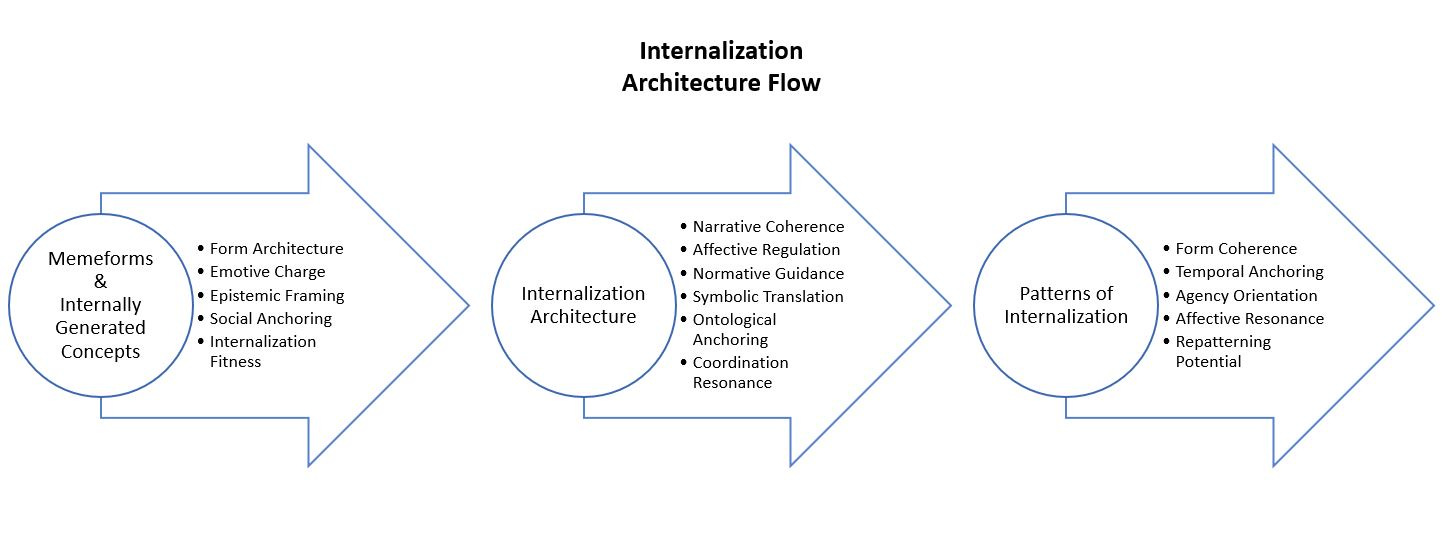
At the core of Power Within is a structure I call the Internalization Architecture: the dynamic framework through which individuals evaluate, filter, and metabolize both external stimuli and internally generated material. This architecture is not a static "filter" but an active, adaptive system shaped by past experiences, social context, cognitive style, emotional patterning, and physiological regulation.
This architecture governs the interface between perception and identity. It evaluates the plausibility, desirability, and coherence of an idea or stimulus, determining whether and how it will be integrated. These processes draw from both conscious reasoning and subconscious evaluation (Kahneman, 2011), and are profoundly shaped by emotional resonance, embodied memory, and social mirroring (Decety & Sommerville, 2003; Damasio, 2010).
In neurodivergent people, the structure of this architecture may vary substantially. For example, individuals with ADHD or autism may demonstrate distinct attentional gating mechanisms or heightened pattern sensitivity, which alters how stimuli are assessed and prioritized for internalization (Arnsten, 2009; Mottron et al., 2006). Mental health conditions such as depression or complex PTSD may introduce distorted self-referential loops or heightened threat sensitivity into this architecture, biasing it toward rejection or overidentification with harmful ideas (Disner et al., 2011).
Power Within depends not on controlling this architecture, but on recognizing, honoring, and adjusting it, making it a site of conscious participation rather than passive conditioning.
Patterns of Internalization: How Ideas Take Root
Once information is internalized, it becomes part of a person’s Pattern of Internalization, the interwoven structure of beliefs, reactions, self-concepts, and meaning-assignments that guide perception and action. These patterns may be fluid or rigid, generative or self-limiting, emergent or inherited.
These internalized patterns often emerge from repeated interactions with social systems and relational environments. Concepts such as "I am unworthy," "I must be productive to matter," or "I am safest when I am invisible" are not simply beliefs; they are embedded coordination patterns shaped through years of reinforcement. They are learned ways of orienting to the world, often without verbal awareness.
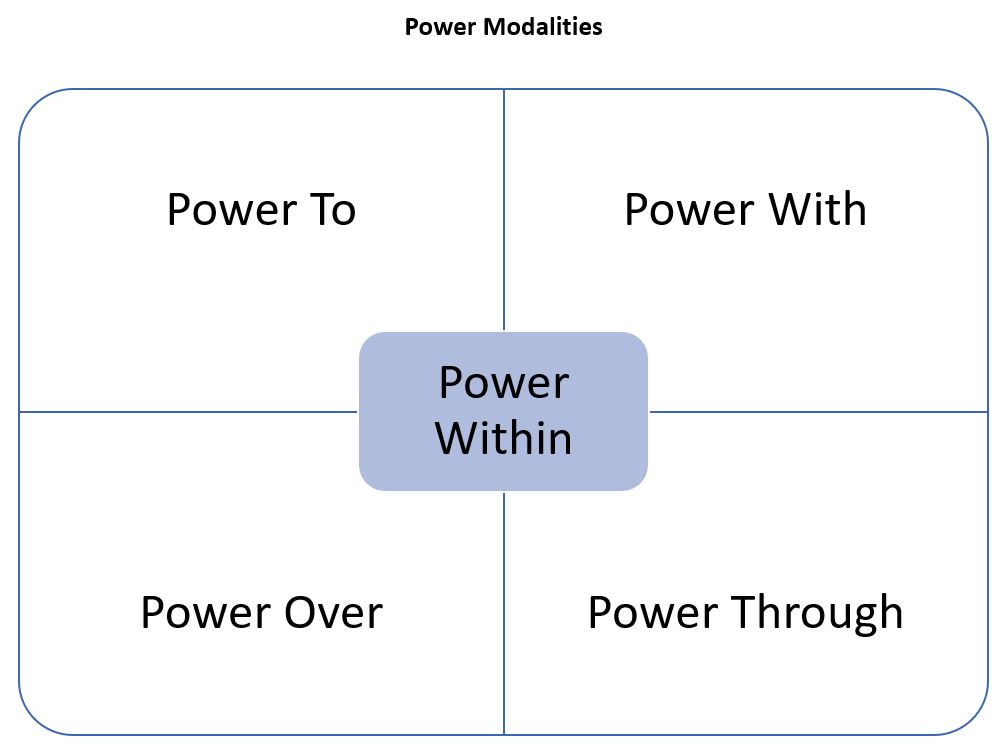
Patterns of Internalization can also carry liberatory seeds. Experiences of trust, care, resonance, or collective joy can encode alternative relational maps. When nurtured, these patterns offer scaffolding for Power With and Power Through dynamics, making relational strength feel viscerally real rather than abstractly desirable.
Unlearning and re-patterning internalization is not merely a cognitive process. It requires somatic, emotional, and symbolic tools to shift what the body and subconscious mind expect from the world. Modalities like mindfulness-based cognitive therapy, parts work, and somatic experiencing work precisely because they help reorganize these deeper patterned layers (Farb et al., 2010; Fisher, 2017).
A Framework for Observing Patterns of Internalization
This framework does not sort patterns into fixed types, but instead describes them along interrelated continua, focusing on how internalizations are formed, sustained, and repatterned. The goal is to cultivate meta-awareness and increase volitional agency, not to constrain the fluidity of internal life.
Structural Dimensions of Internalization Patterns
Each pattern can be described across the following five dimensions. These are descriptive, not prescriptive; they help us observe the shape of a pattern without freezing it in place.
1. Form Coherence
Fragmented – The internalized idea is incoherent, contradictory, or compartmentalized.
Patchwork – Some coherence across situations, but with gaps or inconsistencies.
Harmonic – The pattern is integrated across emotion, thought, and action.
2. Temporal Anchoring
Fixated – Rigidly rooted in past experiences or traumas.
Present-Adaptive – Responsive to current context and relational dynamics.
Future-Oriented – Geared toward imagined possibilities or anticipated threats.
3. Agency Orientation
Imposed – Internalized under duress or without consent.
Assumed – Taken on through repetition or imitation.
Owned – Consciously integrated through reflection or choice.
4. Affective Resonance
Dissonant – Creates distress, shame, or emotional incongruence.
Ambivalent – Produces mixed emotional states or confusion.
Congruent – Aligns with the person’s felt sense, values, and emotional truths.
5. Repatterning Potential
Calcified – Highly resistant to change, often defended or denied.
Permeable – Open to new inputs, with occasional shifts or doubts.
Plastic – Actively in flux, undergoing reflection, transformation, or release.
Pattern Signatures (Descriptive Clusters)
Instead of discrete “types,” patterns can be described by signature constellations—combinations across the above dimensions. For example:
The Burdened Idealist: Harmonic form, future-oriented, assumed agency, dissonant affect, permeable repatterning.
The Fragmented Survivor: Fragmented form, past-fixated, imposed agency, ambivalent affect, calcified repatterning.
The Coherent Rebel: Harmonic form, present-adaptive, owned agency, congruent affect, plastic repatterning.
These are not archetypes, they are momentary configurations that can and do shift.
Pattern Dynamics (How They Change)
This layer focuses on processes rather than labels. Patterns of Internalization shift through:
Emotional resonance and attunement (affect theory)
Exposure to new memeforms (cognitive and social stimuli)
Subconscious integration processes (dreams, somatic practices, trauma recovery)
Volitional Clarity and self-reflective practices
Re-coordination with others (Power With as a repatterning force)
Internalization patterns are not internal only. They are shaped through relational fields, memetic environments, and systemic feedback loops.
Ethical Use of Pattern Awareness
Categorizing internalization patterns should always be guided by:
Curiosity, not judgment
Liberation, not control
Invitation, not prescription
Process, not perfection
In practice, the question becomes:
How does this pattern serve or constrain my power within, my volition, and my coherence with the world I am trying to co-create?
Memeforms: The Carriers of Coordinated Influence
Internalization does not begin in a vacuum, it begins with exposure. Memeforms are external, structured units of culture, behavior, or meaning that are particularly suited to internalization. They function as the "building blocks" of shared symbolic environments and are instrumental in shaping the beliefs, identities, and emotional landscapes of individuals. Memeforms include everything from slogans and myths to gestures, rituals, moral frameworks, and viral imagery. They are not just containers of information; they are vessels of patterned resonance designed to be absorbed into the architecture of the self.
Modular Typology of Internalizable Memeforms
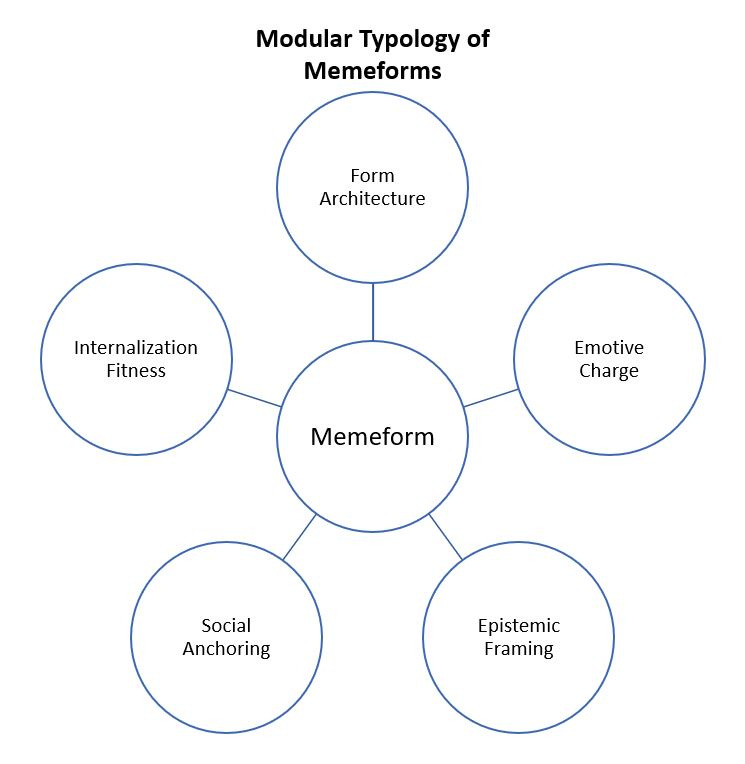
To better understand how memeforms operate, we propose a modular typology: each memeform can be seen as a multi-dimensional object, structured across five key dimensions. Each dimension contributes to its internalization potential; how and why it enters the self.
1. Form Architecture: The Structural Shape of the Idea
This dimension refers to how a memeform is encoded; its shape, packaging, and structural logic:
Iconic - Memorable symbols or images (e.g. the Christian cross, the hammer and sickle).
Narrativized - Embedded within a story arc or journey (e.g. the “rags to riches” myth).
Abstracted - Generalizable or conceptual (e.g. “justice is blind”; economic rationality).
Patterned - Composed as repetitive or ritualized forms (e.g. slogans, chants, mnemonics).
Each structure activates different cognitive and emotional processing systems (Bruner, 1990; Schank & Abelson, 1995), influencing how deeply and quickly a memeform is internalized.
2. Emotive Charge: The Affective Intensity the Idea Carries
This dimension governs the emotional salience of a memeform, how it feels:
High-Arousal Positive - Evokes hope, triumph, love, or empowerment.
High-Arousal Negative - Triggers fear, rage, shame, or urgency.
Low-Arousal Resonant - Conveys awe, sacredness, quiet grief, or mystery.
Flat/Neutral - Lacks emotional pull; prone to dismissal or shallow processing.
Neuroscience confirms that emotionally charged stimuli are more likely to be encoded in long-term memory and behavioral orientation (Phelps, 2006). For trauma-impacted or neurodivergent individuals, this affective filter may be amplified, disrupted, or selectively biased (van der Kolk, 2014; Polyvagal Theory, Porges, 2011).
3. Epistemic Framing: The Claim the Idea Makes
This dimension captures what kind of reality the memeform purports to represent:
Truth-Claim - States a belief about the world: “The world is flat.”
Norm-Claim - Asserts moral or behavioral imperatives: “You must obey.”
Identity-Claim - Defines personhood or belonging: “You are a sinner.”
Future-Claim - Projects an inevitable trajectory: “Progress is coming.”
Framing shapes how a memeform is evaluated by the internalization architecture, whether it is processed as fact, rule, identity, or prophecy. Misalignment between internal epistemic needs (e.g., uncertainty tolerance, trauma-informed safety needs) and external memeform framing can inhibit or distort integration (Festinger, 1957; Harambam & Aupers, 2015).
4. Social Anchoring: Where the Idea Belongs Socially
Memeforms do not circulate in isolation; they are embedded in social contexts:
Mimetic - Spread through imitation or modeling (Bandura, 1977).
Role-Aligned - Tied to identity positions or performance (e.g. “boys don’t cry”).
Group-Sanctioned - Enforced through peer pressure or community consensus.
Sacralized - Treated as sacred, holy, or morally absolute (e.g. national flags, martyrdom stories).
These anchors determine the stickiness of a memeform within social systems, and also create the conditions under which resisting a memeform becomes socially costly. Neurodivergent individuals or marginalized groups may experience dissonance or forced masking when dominant memeforms do not align with their lived experience (Hull et al., 2017; Goffman, 1963).
5. Internalization Fitness: Likelihood and Mode of Adoption
Finally, a memeform’s internalization fitness reflects its potential to “take root”:
Low-Friction - Easily absorbed; ambient or intuitive.
High-Friction - Demands critical thought, emotional struggle, or worldview shifts.
Recursive - Shapes perception and behavior in ways that reinforce itself (e.g. “success means dominance”).
Viral - Spreads rapidly and widely; contagious in social ecosystems.
This dimension is key to understanding Power Over and Power Through. Authoritarian ideologies often deploy low-friction, high-arousal memeforms to bypass critical reflection. Movements for liberation often require high-friction, recursive memeforms that demand sustained engagement and reflection, yet these can generate deeper transformation.
Final Thoughts on Memeforms
When we view memeforms not as random bits of culture but as engineered structures designed for internalization, we gain agency in our participation. Power Within requires not merely resisting harmful memeforms, but actively curating, adapting, and generating new ones, crafted to resonate with our architectures and aligned with liberation.
This typology offers a tool for discernment. It allows us to examine what we have internalized, how it was shaped, and what new memeforms we might welcome into the self.
Revisiting Patterns of Internalization: The Dynamic Shape of the Self
Once a memeform enters the internalization architecture, it does not remain static. It interacts with other ideas, beliefs, memories, emotions, and bodily states already present. These interactions give rise to Patterns of Internalization, dynamic, evolving constellations of meaning and behavior that guide perception, motivation, and action. These patterns form the internal topography of the self: what we believe, what we feel compelled to do, and how we interpret the world.
These patterns are recursive and self-organizing. A memeform that once functioned as a coping mechanism may evolve into a rigid defensive structure; a liberatory narrative once internalized may scaffold resilience and self-worth. This fluid architecture is shaped by ongoing feedback loops between experience, interpretation, and embodiment (Siegel, 2012; Damasio, 1999).
For neurodivergent individuals, these patterns may follow unique logics, non-linear, associative, or hyper-specific pathways that neurotypical models often fail to account for (Milton, 2012). Similarly, individuals with trauma histories may show patterns marked by hypervigilance, dissociation, or avoidant encoding, shaped by adaptations to chronic stress or unsafe environments (Herman, 1992; Ogden et al., 2006). These are not deficits, but reflections of the internalization system’s adaptive intelligence.
Internalized patterns are rarely pure. They are composite, often containing contradictions or unresolved tensions. A single identity pattern might contain both liberation and repression. What matters is not the elimination of contradiction, but the cultivation of reflective awareness: Where did this come from? What function is it serving? Is it still aligned with what I want to be?
This reflective capacity, what we might call metacognitive internal sovereignty, is a core feature of Power Within. It allows us to observe the architecture, intervene in the patterns, and curate our internal landscape.
Understanding Internalization Architectures: The Framework of Meaning-Making
The Internalization Architecture is the adaptive, semi-permeable framework within the self that evaluates, filters, and integrates external and internally generated material. It is not a fixed structure but a living system: a reflexive network that evolves through experience, culture, trauma, reflection, and imagination. It is composed of attentional habits, value hierarchies, epistemic filters, emotional orientations, and somatic states. These components together determine what gets internalized, how deeply, and in what form.
This framework is shaped early in life, influenced by attachment patterns (Bowlby, 1988), developmental environment, and the implicit norms of dominant culture. It is continually revised throughout life in response to relational dynamics, ritual processes, and identity disruptions. Neuroplasticity ensures that it remains malleable, though some patterns become deeply entrenched over time (Doidge, 2007).
Importantly, this architecture is not purely cognitive. It includes somatic and emotional intelligence, as well as unconscious or pre-verbal mechanisms. Interoceptive cues, bodily sensations that track internal states, play a significant role in what feels “true” or “safe” to integrate (Craig, 2009; Tsakiris & Critchley, 2016). For those with interoceptive difficulties (e.g., in autism, alexithymia, or PTSD), internalization may be skewed toward externally imposed narratives or suppressed emotional material (Brewer et al., 2016).
Understanding our own internalization architecture allows us to resist oppressive coordination patterns and cultivate those that enhance liberation, coherence, and intersubjective connection. It is not enough to reject harmful memeforms; we must also design and install new patterns of meaning that reflect our deepest values and felt experiences.
Internalization Architecture: Affective Encoding, Neural Patterning, and Trauma-Shaped Integration
The process of internalization, how ideas, beliefs, values, and roles are absorbed into the self, cannot be adequately explained through cognition alone. It is a multi-dimensional process shaped by affective intensity, neural structure, developmental history, and the presence or absence of trauma. This section explores internalization as a layered mechanism of Power Within, where stimuli are filtered, evaluated, and embedded within an individual's evolving coordination architecture.
Affective Filters and the Primacy of Feeling
Internalization begins not with interpretation, but with feeling. Affect theory reminds us that before a concept can be evaluated, it is felt as charge, discomfort, attraction, or resonance. As Brian Massumi argues, affect precedes conscious understanding and shapes perception at a pre-cognitive level (Massumi, 1995). Affect functions as the first gate in the internalization architecture: it determines whether a memeform “lands,” activates a defensive pattern, or is ignored entirely.
This has powerful implications for how memeforms embed themselves. Those charged with high-arousal emotions, such as pride, fear, love, or shame, are more likely to bypass conscious resistance and install themselves directly into internal self-structure. Memeforms with a low-arousal but resonant affect, like awe or melancholy, tend to shape deeper existential or mythopoetic layers of identity. Cultural affect, as theorized by Lauren Berlant (2011), also mediates which forms of experience gain traction socially and thus affect internalization across populations.
Affective resonance is especially critical for individuals whose internal architectures have been shaped by trauma, marginalization, or neurodivergence. For these individuals, emotionally charged stimuli can either catalyze transformation or trigger protective filtering responses, depending on context and relational safety.
Neural Substrates of Internalization
Neuroscience provides insight into how internalization takes root at the level of brain structure and plasticity. Repeated exposure to emotionally salient stimuli activates Hebbian learning mechanisms (“neurons that fire together wire together”), encoding those stimuli into increasingly accessible neural patterns. This applies to both empowering and disempowering memeforms. Ritual, repetition, and multisensory engagement strengthen these internal traces (Koch et al., 2012).
The mirror neuron system plays a key role in mimetic internalization, where ideas and behaviors are absorbed through observation, especially in early development and social bonding. Meanwhile, the polyvagal theory (Porges, 2011) demonstrates how physiological states of safety or threat determine an individual’s openness to integrating new experiences. When the body is dysregulated, mobilized into fight, flight, or freeze, the internalization system becomes reactive or defensive. When the system is calm and regulated, new information is more easily integrated through social engagement and reflective processing.
The internalization architecture, then, is not just conceptual; it is biological. The architecture is composed of neural gates, affective thresholds, and embodied memory traces that either welcome or reject incoming coordination patterns. This has major implications for therapeutic, educational, and political efforts to shift internalized belief systems.
Trauma and the Protective Rewriting of Internalization
Trauma studies expose how internalization architectures are not neutral but are often shaped through painful adaptations. Traumatic experience can cause individuals to develop protective filtering mechanisms that resist or distort incoming stimuli. Memeforms that evoke feelings of vulnerability, authority, or contradiction to past survival strategies may be unconsciously rejected, twisted, or compulsively reenacted.
For example, a norm-claim such as “you are worthy of care” may be easily integrated in a nervous system shaped by secure attachment, but it may be blocked or disbelieved in someone whose internalized patterns are governed by shame or hypervigilance. The body may flinch away from such a claim even if the mind consciously desires it.
Repetition compulsion, as described in psychoanalytic trauma theory, explains why individuals may repeatedly internalize harmful memeforms, especially those that mirror unresolved scripts of helplessness, abandonment, or domination. Meanwhile, fragmentation and dissociation (van der Kolk, 2014) may result in partially or inconsistently integrated ideas: absorbed without coherence, often resurfacing in times of stress or relational conflict.
Nevertheless, trauma does not destroy the possibility of internalization, it reshapes it. In the presence of safe, resonant, and gently recursive memeforms, the architecture can begin to reorganize. This process requires more than information; it requires relational safety, emotional coherence, and a structure of repetition and reinforcement that allows neural re-patterning and narrative re-integration.
Final Thoughts on Internalization Architectures
By understanding internalization as a dynamic, affectively-charged, neurobiologically situated, and trauma-responsive process, the framework of Power Within gains precision and depth. Coordination is not merely external, it is internalized through lived affect, neural structure, and the sedimentary influence of past experience.
Therefore, liberatory coordination must attend to the conditions under which internalization becomes possible: safety, resonance, repetition, and relational attunement. It is only through such care that new memeforms, those aligned with autonomy, dignity, and collective liberation, can be received, integrated, and sustained in the architecture of the self.
Power Within emerges when we become sovereign curators of our internal architecture. This sovereignty is not about domination or perfection. It is about discernment, responsiveness, and the capacity to host complexity without collapse. It involves:
Developing awareness of what we’ve internalized and how it was shaped.
Naming and interrupting patterns of Power Over internalization.
Reclaiming emotional, epistemic, and narrative authority from colonizing structures.
Creating space for memeforms and patterns that resonate with lived truth, liberatory ethics, and collective care.
This process is necessarily ongoing. It is not a single act of will, but a cyclical dance of reflection, reconfiguration, and realignment. Internalization is not a past event but a living, continuous process, and thus, sovereignty is not a static state but a dynamic practice.
In the context of coordination, this becomes especially vital. Every coordination system we enter carries its own memeforms, its own implicit architectures. Without internal sovereignty, we risk replicating domination even in the pursuit of liberation. With it, we become capable of generating coordination that begins from within, rooted in clarity, coherence, and self-attuned discernment.
Volitional Clarity: Aligning Desire, Direction, and Action
The Anatomy of Will
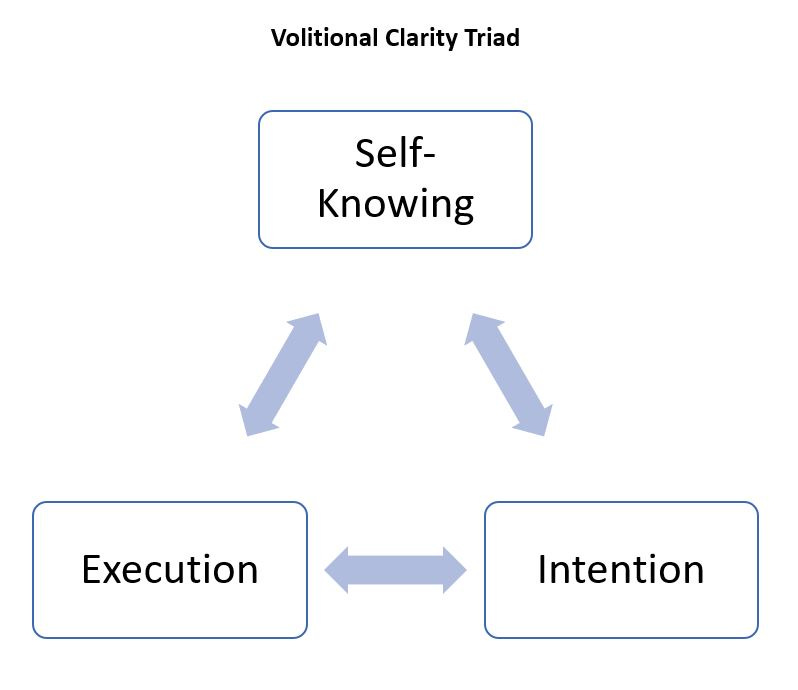
Volitional clarity is the capacity to sense, shape, and sustain aligned action. It is the internal coordination of desire (what we want), direction (what we choose), and execution (what we do). Without it, individuals may feel scattered, inert, self-sabotaging, or pulled in contradictory directions. With it, even small actions can become infused with purpose and coherence.
Unlike popular notions of “willpower,” which often frame the will as a limited resource (Baumeister et al., 1998), volitional clarity is not about gritting one’s teeth through resistance. It is about attunement, listening closely to the self, detecting internal dissonance, and re-establishing alignment between intention and behavior (Ryan & Deci, 2000).
Volitional clarity arises not from suppression of conflicting drives but from integrating them into a deeper, more unified sense of direction. It is an emergent quality of a well-coordinated internal system, an expression of Power Within.
The Three Axes of Volitional Clarity
Desire Awareness
Desire is the initiating pulse of the will. Yet many individuals are alienated from their desires, conditioned to suppress them, moralize them, or mistake the desires of others for their own. Reclaiming volitional clarity begins with recognizing: What do I actually want? Not what is expected of me, not what is safe, but what truly calls me.
Desire awareness requires affective and somatic attunement. It often comes in felt senses, images, or pre-verbal pulls. Neurodivergent and traumatized individuals may experience desire in atypical or hard-to-parse ways. Honoring this diversity is essential (Price, 2015; Hughes et al., 2019).
Motivational Integration
Once desire is known, it must be metabolized into motivation. This requires resolving or harmonizing competing drives. For example, the desire to speak out might conflict with a fear of rejection. Motivational integration involves identifying internal blockers and clarifying what deeper value or need the blocker protects.
Psychodynamic approaches (e.g., Internal Family Systems) view such blockers as “parts” with their own logic and protective roles (Schwartz, 2001). Neuroscientific research on the salience network and executive function systems supports the idea that coherent motivation emerges from dynamic coordination among brain systems involved in emotion, value processing, and future planning (Seeley et al., 2007; Dosenbach et al., 2008).
Executive Action
The final axis is translation into action. Executive function, the capacity to plan, sequence, and act is shaped by both neurobiological and environmental factors. For individuals with executive dysfunction (as in ADHD, depression, or trauma responses), volitional clarity may be clear internally but blocked in implementation.
Supporting volitional clarity here means creating conditions that reduce friction, rituals, reminders, body-based practices, social accountability, and environmental design. Clarity is not just a state of mind, it is a pattern of support that allows aligned action to unfold.
Volitional Clarity and Internal Coordination
In the CfP framework, volitional clarity is the micro-level coordination of the self. It arises when the internal threads of feeling, meaning, memory, and intention are not in opposition, but in resonance.
This coordination is fragile under domination. Systems of Power Over often fragment volitional clarity by:
Replacing desire with obligation (e.g., moralizing labor)
Splitting self into conflicting roles (e.g., worker vs. parent)
Undermining action through surveillance or punishment (e.g., bureaucratic inertia)
Rebuilding volitional clarity is thus both an internal and political act. It is the reclaiming of internal coordination from systems that benefit from confusion, paralysis, and self-alienation.
Cultivating Volitional Clarity
Volitional clarity is not a fixed trait. It is a practice. Some methods that support its cultivation include:
Desire-mapping: journaling or dialoguing to track what you want and why
Internal dialogue: identifying and negotiating with conflicting “parts”
Somatic alignment: tracking bodily cues of “yes,” “no,” and “maybe”
Commitment rituals: enacting decisions through symbolic or social acts
Temporal scaffolding: building habits and supports that serve chosen aims
Collective support is also essential. Coordinating with others in a way that amplifies rather than fragments clarity, through mirroring, mutual reinforcement, or shared intention, can deepen Power With and reinforce Power Within.
Historical and Cultural Examples of Volitional Clarity Under Oppression
1. Harriet Tubman and the Underground Railroad
Harriet Tubman’s actions exemplify a powerful embodiment of volitional clarity. Despite having experienced severe trauma, head injury, and enslavement, Tubman maintained an unwavering alignment between her internal compass and her external actions. Her desire for freedom, first for herself, then for others, was clear. She integrated her spiritual visions, personal suffering, and strategic cunning into repeated acts of escape and rescue.
Even when escape meant traversing hundreds of miles on foot, risking death, and defying one of the most oppressive institutions in history, her clarity of volition remained intact and contagious (Clinton, 2004). Her will was not only personal but transpersonal, a clear thread of Power Within that resonated with and helped organize Power With.
2. The Mothers of the Plaza de Mayo (Argentina, 1977–present)
In the aftermath of Argentina’s "Dirty War," in which thousands were “disappeared” by the military dictatorship, a group of mothers began gathering weekly in Buenos Aires, demanding to know the fate of their children.
Their grief transformed into deliberate, embodied protest, white headscarves, silent walking in circles, and the naming of names. Despite surveillance, threats, and ongoing trauma, they coordinated themselves with astonishing clarity and resolve (Bouvard, 1994). Their volitional clarity, grounded in personal loss, allowed them to confront a vast system of fear and repression.
3. Disability Justice Movements
Volitional clarity is often misunderstood in the context of disability, especially cognitive or neurodevelopmental disabilities, where external observers may assume a lack of coherence or capacity. Yet movements led by people with disabilities, especially cross-disability, neurodivergent, and Mad Pride movements, have demonstrated that volitional clarity does not depend on normative expressions of will or action.
Sins Invalid, for example, centers disabled, queer, and BIPOC voices in a disability justice performance collective that explicitly honors non-linear, non-normative expressions of desire and self-determination (Mingus, 2010). Here, clarity arises not from conformity to dominant frameworks, but from the radical integration of embodied experience, memory, and desire on one’s own terms.
4. Tibetan Buddhist Monks and the Resistance to Cultural Erasure
In the face of Chinese occupation and repression, Tibetan monks have engaged in highly disciplined, nonviolent resistance. Their spiritual practices, centered on clarity of mind, intentionality, and compassion, have helped many preserve volitional clarity despite torture, imprisonment, and exile (Thurman, 1997).
In some cases, the decision to engage in hunger strikes or self-immolation has been described by the practitioners themselves not as acts of despair, but of fully clarified volition: a final act of communicative alignment between inner truth and outer expression.
5. Queer and Trans Autonomy in Hostile Systems
In societies that marginalize, pathologize, or erase queer and trans identities, simply claiming one’s gender or sexuality can be an act of volitional clarity. For many trans individuals, the process of gender transition is a negotiation between internal desire, social consequences, bodily change, and existential risk.
Rather than being impulsive or confused, these decisions are often the result of deep volitional work, aligning a felt inner truth with external expression and action, even when doing so involves loss of family, safety, employment, or citizenship (Spade, 2011). Trans activists have emphasized that clarity is not the absence of fear, but the presence of alignment strong enough to move through it.
Summary: Volitional Clarity as Liberatory Potential
Volitional clarity does not require ideal conditions. It often emerges despite the fragmentation imposed by external systems. What these examples share is not just heroic resolve, but the presence of an internal architecture resilient enough to sustain clarity across dissonance.
This resilience is not individualistic. It is shaped by culture, community, trauma history, and access to supportive conditions. Yet it is also irreducibly personal, no one else can coordinate your inner threads for you.
In a world that profits from confusion, self-betrayal, and misalignment, volitional clarity is a radical form of Power Within. It is the seed of all other power forms: the root from which Power To, Power With, and even Power Through may grow.
Grounding Practices as Infrastructure
Volitional clarity is not forged solely through thought or will. It requires an infrastructure of grounding: practices and conditions that stabilize, orient, and reconnect a person to the threads of their selfhood. Without grounding, intentions fragment, perception distorts, and the ability to act in alignment is undermined. Grounding is not a luxury; it is a precondition for sustainable volition, especially under pressure.
This section explores four interrelated layers of grounding: emotional, cognitive, somatic, and communal. Together, they form the architecture that enables Power Within to cohere and adapt.
Emotional Grounding: Interoception, Regulation, Expression
Emotional grounding refers to the capacity to feel and regulate one’s emotions while staying connected to the body and environment. At its foundation is interoception, the perception of internal bodily states, such as heartbeat, breath, and visceral sensations. Interoceptive accuracy and awareness have been shown to influence emotional regulation and decision-making (Critchley & Garfinkel, 2017).
For trauma survivors or neurodivergent individuals, interoceptive pathways may be disrupted, either hyperactive (e.g., anxiety sensitivity) or blunted (e.g., dissociation). Grounding practices like breath awareness, somatic tracking, or sensory regulation (van der Kolk, 2014) help rebuild these pathways. Such practices foster non-reactivity without suppression, allowing emotion to arise and move without hijacking volition.
Expression is equally vital. Emotions, when silenced or shamed, become internalized as static loops that undermine clarity. Grounded expression, whether verbal, artistic, or embodied, externalizes emotion in a way that reestablishes flow. In collective contexts, witnessing and validating emotional truth also becomes a coordination thread, helping others feel safe to clarify their own volition.
Cognitive Grounding: Sovereignty Over Frames, Attention, and Language
Cognitive grounding involves maintaining sovereignty over the frames, concepts, and attentional flows that shape one’s understanding of reality. Without cognitive grounding, external memeforms, particularly those with manipulative epistemic framing or high-arousal emotive charge, can hijack volition by implanting false imperatives or fragmenting attention (Carr, 2010; Nagle, 2022).
Key elements of cognitive grounding include:
Frame awareness: Recognizing that all information is presented within a conceptual structure, and learning to identify and deconstruct imposed frames (Lakoff, 2004).
Attentional control: The ability to redirect attention, especially in high-noise or emotionally charged environments. This is crucial for ADHD and other executive function divergences (Barkley, 2012).
Language clarity: Because internal dialogue and conceptual schemas are often mediated through language, the precision of one’s language shapes the clarity of thought (Whorf, 1956; Boroditsky, 2011).
Cognitive grounding also includes epistemic humility, acknowledging that perception is never complete. Rather than clinging to certainty, grounded cognition allows fluid adaptation without collapsing into confusion.
Somatic Grounding: Reattunement to the Body’s Tempo and Intelligence
The body is not simply a vessel for action; it is a dynamic site of knowing, reacting, and coordinating. Somatic grounding is the process of restoring awareness to the body’s tempo, limits, and signals, not as obstacles to overcome, but as intelligent contributors to volitional clarity.
Trauma, systemic oppression, and neurodivergence often induce disembodiment: a dissociation from physical presence due to chronic stress, overstimulation, or learned suppression (Ogden, Minton, & Pain, 2006). Reattuning to the body through practices like grounding touch, movement, stillness, or sensory re-engagement helps restore embodied trust.
Somatic grounding is not about mastery but listening. A grounded body provides signals about when action is aligned and when it is not. It alerts us to manipulation, danger, or exhaustion, often faster than cognition can process. In this way, it acts as a nonverbal feedback loop, vital to sustaining Power Within.
Somatic practices must be inclusive and adaptive. For those with chronic illness, pain, or neurodivergent sensitivities, grounding must be gentler and less prescriptive, inviting the body’s language rather than imposing a fixed one.
Community as Amplifier or Eroder of Grounding
No one grounds alone. Community is the soil in which grounding practices are either nurtured or uprooted. Social environments can amplify grounding through co-regulation, attunement, and shared clarity, or erode it through gaslighting, coercion, invalidation, or overstimulation.
Neuroscience supports this social dimension. Human nervous systems co-regulate through voice tone, gaze, posture, and rhythm (Porges, 2011). In safe, attuned environments, even dysregulated individuals can begin to re-regulate. Conversely, even grounded people can become disoriented in environments of chronic noise, control, or emotional invalidation.
This means that grounding is both personal infrastructure and collective ecology. Movements, organizations, and families must become sites of grounding if they wish to sustain volitional clarity among their members. This includes:
Normalizing emotional expression
Making space for rest and silence
Avoiding overstimulation and urgency cycles
Encouraging diverse regulation strategies
Grounded community creates the conditions for mutual clarity, from which Power With and Power Through can emerge.
The Myth of the Isolated Will
The dominant cultural myth in many modern societies, particularly those shaped by neoliberalism and settler-colonial ideologies, is that of the isolated, autonomous will: a sovereign individual who, through grit and willpower alone, masters their circumstances, creates their destiny, and transcends limitation. This myth has deep roots in Enlightenment liberalism, capitalist meritocracy, and Protestant moralism, each of which positioned the individual as the ultimate locus of agency and responsibility (Taylor, 1989; Foucault, 1978).
This section dismantles that myth and repositions Power Within as relationally grounded, contextually shaped, and ecologically dependent, without collapsing into determinism. It invites a reframing: will is not a lever pulled in isolation, but a terrain navigated in dynamic relationship with both self and world.
Neoliberal Willpower and the Burden of Self-Mastery
The neoliberal subject is expected to be a self-regulating entrepreneur of the self, constantly optimizing, self-correcting, and performing control over inner and outer conditions (Brown, 2015). Within this paradigm, failure is moralized as a failure of will, rather than a reflection of systemic forces, trauma history, or material constraint.
This ideology weaponizes volition: rather than serving liberation, the will becomes a site of internalized surveillance, where individuals are judged for not achieving "resilience" fast enough or manifesting success effectively (Ehrenreich, 2009; Rose, 1996).
For neurodivergent people, trauma survivors, or anyone navigating chronic oppression, this mythology is particularly violent. It invalidates the actual conditions of their lives, economic precarity, sensory overwhelm, executive dysfunction, or ongoing systemic harm, by blaming them for not “choosing” their way out.
Will as Relational: Emergent, Not Autonomous
Against this myth, we propose a different understanding: Power Within is always shaped in and through relationship, with body, memory, culture, and ecology. It is not simply chosen but emerges through the interplay between volition and environment. Even the capacity to choose presupposes scaffolding: nourishment, language, attention, safety, care (Narvaez, 2014).
Relational neuroscience affirms that early caregiving shapes the brain's core regulatory systems, including the default mode network and prefrontal capacities tied to self-awareness and decision-making (Schore, 2012; Siegel, 2010). Likewise, social context continues to regulate and shape internal capacities throughout life, through mirroring, attunement, conflict, and belonging.
Power Within thus arises not in spite of context, but through context, though it is never reducible to it. Individuals retain the potential to interrupt, repattern, and reclaim their volitional terrain. But this potential is not an abstract capacity, it must be nurtured through infrastructure, resonance, and interdependence.
Resisting Determinism and Voluntarism
Crucially, rejecting the myth of isolated will does not mean endorsing determinism, the idea that people are nothing more than products of their environment, conditioning, or neurobiology. Nor does it require rejecting voluntarism outright, the belief in the power of intentional agency.
Instead, Power Within operates on a third axis: it is neither a fixed capacity nor an illusion. It is a dynamic field of potential, a terrain that shifts in relation to emotion, memory, community, and coordination. One’s ability to act is not simply there or not there; it is cultivated, disrupted, reconstituted, and relationally amplified.
This perspective echoes insights from complexity science and systems thinking, where agency is seen as emergent, not reducible to individual parts, but arising from the interaction of many influences (Meadows, 2008; Thelen & Smith, 1994). Likewise, it resonates with Indigenous and postcolonial understandings of selfhood as interwoven with land, kin, and spirit, rejecting the Western atomization of agency (Watts, 2013; Cajete, 2000).
Volitional Terrain: A Living Ecosystem
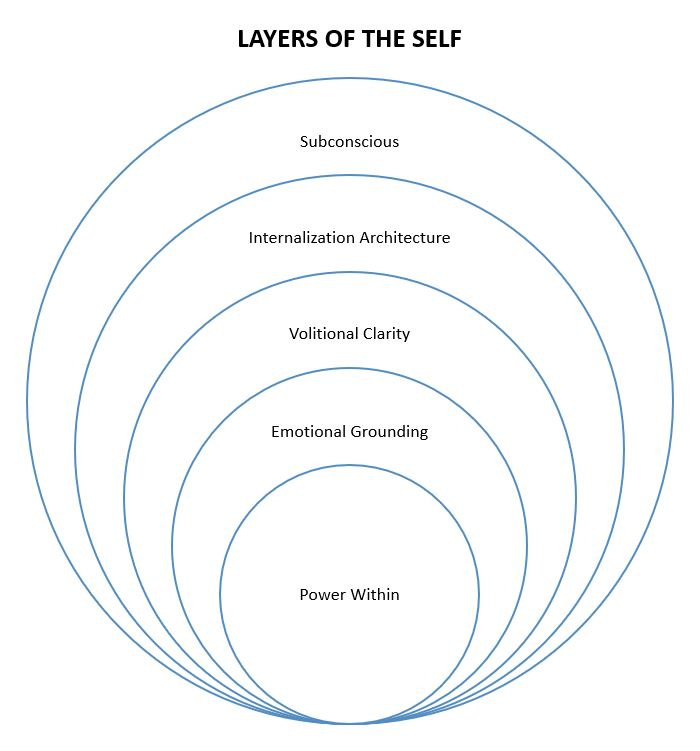
To embody Power Within, one must learn to navigate the terrain, to feel its contours, identify internal and external blockages, and reweave its pathways. This terrain includes:
Emotional currents and wounds
Subconscious patterns and scripts
Memetic influences and social framing
Community conditions and feedback loops
Bodily signals and somatic states
Rather than striving for a purified will, the goal is attunement, to become a skilled weaver of one's volitional threads, responsive to both inner resonance and outer reality. This attunement restores agency not as control but as coordination, a fluid, embodied capacity to act in alignment with what is known, felt, and true.
Power Within, then, is not about imposing dominance over the self. It is about restoring the right relationship between volition and context, impulse and care, self-direction and interdependence.
Disruption and Reconstitution: Healing, Rewriting, Reclaiming
While volitional clarity can be cultivated through relational alignment and deepening awareness, most individuals carry inherited, internalized, or imposed distortions that interfere with the emergence of Power Within. These distortions, often tied to trauma, social oppression, or early developmental conditioning, disrupt the continuity between desire, action, and meaning. This section explores how Power Within is reclaimed not by bypassing these distortions, but by entering into a process of disruption and reconstitution: interrupting dominant scripts, metabolizing past experience, and reconstructing volitional architectures from the inside out.
Disruption: Intervening in Conditioned Patterns
Disruption begins with interruption, moments when internalized scripts are exposed as contingent rather than inevitable. These moments often emerge during crisis, collective action, ritual, therapeutic process, or altered states of consciousness (Turner, 1969; van der Kolk, 2015). In neurobiological terms, disruption can correlate with prediction error, when the brain's models of the world are violated by unexpected feedback, triggering cognitive flexibility and potential reorganization (Friston, 2010; Kandel et al., 2013).
Importantly, for individuals navigating mental health challenges or neurodivergence, disruption must be approached with care. Sudden or overwhelming interruption of internal structure without adequate support can lead to dysregulation, fragmentation, or retraumatization (Ogden, Minton, & Pain, 2006). For this reason, collective holding, somatic safety, and contextual grounding are vital scaffolds for generative disruption.
In the CfPr framework, these moments represent a rupture in internal coordination, when preexisting patterns of meaning, desire, and agency can no longer maintain coherence. While destabilizing, such ruptures also open the possibility of transformation.
Metabolizing Experience: Grief, Rage, and Integration
After disruption, the process of metabolization begins, the affective and cognitive digestion of experience that has been suppressed, fragmented, or distorted. This often includes contact with painful emotions such as grief, shame, rage, or abandonment, which must be felt and re-integrated rather than bypassed (Menakem, 2017; Levine, 1997).
Neuroscience research supports the importance of affect labeling and emotional integration in promoting self-regulation and executive function (Lieberman et al., 2007). Additionally, trauma research shows that embodied processing, through movement, breath, vocalization, and touch, can help complete interrupted survival responses and restore volitional coherence (van der Kolk, 2015; Porges, 2011).
This metabolization is not purely personal, it often implicates collective wounds and cultural trauma, particularly for marginalized communities. In such cases, integration may require narrative reclamation, ancestral connection, or cultural ritual to fully reweave Power Within (Kirmayer et al., 2003; Duran, 2006).
Rewriting: Volitional Reprogramming and Narrative Revision
Once internalized patterns have been disrupted and metabolized, a new phase begins: rewriting. This is the intentional reconstruction of volitional architecture, replacing inherited scripts with chosen patterns, practices, and stories that support self-aligned action.
This process is deeply intertwined with neuroplasticity, the brain’s lifelong capacity to form new neural connections in response to experience and intention (Doidge, 2007). Techniques such as reframing, affirmation, ritual repetition, and imaginal rehearsal can anchor new volitional configurations (Siegel, 2010). In narrative therapy, this is called externalizing the problem and reauthoring the story (White & Epston, 1990).
In the CfP framework, rewriting can be understood as the reprogramming of internal threads, replacing authoritarian, suppressive, or dissonant memeforms with new internalized patterns that support Power With and Power Through rather than Power Over. For example, the shift from “I must earn my worth” to “My worth is inherent and relational” transforms both decision-making and affective tone.
Reclaiming: Rituals of Re-Coordination
Finally, Power Within is reclaimed not through belief alone, but through re-coordination: the lived practice of integrating new volitional patterns into daily life. This includes:
Somatic anchoring: Reconnecting with the body as a source of orientation and agency (Caldwell, 2018)
Relational coherence: Building relationships that reflect and affirm chosen values
Memetic hygiene: Curating environments that reinforce liberatory memeforms rather than oppressive ones
Ritual practice: Developing consistent, meaningful actions that maintain volitional clarity and alignment
These rituals, whether personal or collective, serve as the threading mechanisms by which new internal architectures are stabilized and continually woven into being.
Interference and Sabotage: How Power Over Undermines Power Within
Power Within does not emerge in a vacuum. It is shaped, distorted, and often actively undermined by the dominant systems of Power Over, those that depend on obedience, disorientation, and disconnection to reproduce themselves. This section explores how such systems sabotage the emergence of Power Within through psychological, social, and informational means, and how reclaiming coherence becomes a form of resistance.
Degradation Mechanisms: Shame, Confusion, Hyperstimulation, Dependency
Systems of control, be they authoritarian regimes, exploitative economies, or coercive cultural norms, frequently operate by disrupting the internal architectures that make volitional clarity possible. This is accomplished through four primary mechanisms:
Shame: By pathologizing desire or identity, shame severs the internal link between self-recognition and self-expression (Brown, 2006; Gilbert, 2002). Shame hijacks the body’s social regulation circuits, producing paralysis, appeasement, or self-abandonment (Kaufman, 1989).
Confusion: Epistemic confusion undermines the ability to distinguish between internal desire and external imposition. This includes the manipulation of language, value systems, and perceptual cues to obscure what is real or trustworthy (Herman, 1992).
Hyperstimulation: In attention economies and overstimulated environments, individuals are flooded with inputs that overwhelm internal sensemaking and deplete cognitive resources (Rosen, Lim, Carrier, & Cheever, 2011). This diminishes the capacity for deep processing and volitional discernment.
Dependency: Structural dependency, on employers, platforms, institutions, erodes autonomous volition by tying survival to compliance. Learned helplessness often develops in such environments, where attempts at agency are repeatedly punished or ignored (Seligman, 1975).
These mechanisms are not incidental, they are often designed features of Power Over systems that function to fragment and pacify the inner world of those they dominate.
Techniques of Disorientation
In the CfP framework, these mechanisms constitute sabotage of internal coordination, the deliberate introduction of distortive threads that block the coherent integration of perception, affect, and volition. Specific techniques include:
Disinformation: Not merely the spread of false facts, but the erosion of epistemic trust. Disinformation introduces noise into the system, impairing one's ability to construct reliable internal models (Lewandowsky, Ecker, & Cook, 2017).
Extractive Productivity: Capitalist paradigms enforce tempo-based extraction, productivity as the basis for worth, which destabilizes self-directed pacing and leads to burnout, dissociation, or compliance (Cederström & Spicer, 2015; Berardi, 2009).
Learned Helplessness: When consistent effort fails to produce change, individuals may internalize futility itself as a structural truth. This results in flattened volition and avoidance of action, even when escape becomes possible (Maier & Seligman, 2016).
These techniques function memetically; they replicate and reinforce disorientation through media, education, institutional rituals, and even well-intentioned motivational frameworks. A slogan like “hustle harder” can serve as a viral memeform that re-inscribes dependency on productivity for self-worth.
Reclaiming Coherence as Resistance
Against this backdrop, the act of reestablishing inner coherence becomes radical. To reclaim Power Within is to reweave the threads of self-coordination that Power Over systems seek to sever. This involves:
Reaffirming epistemic sovereignty: Trusting one’s perception, experience, and sensemaking even in the face of gaslighting or cultural noise (Code, 1991; Medina, 2013).
Reintegrating suppressed emotions: Shame, fear, and grief are metabolized rather than pathologized, restoring affective coherence and self-trust (Menakem, 2017; van der Kolk, 2015).
Curating environments of resonance: Internal coherence is supported by external coordination, relational and communal containers that reflect and affirm liberated volition (hooks, 2000).
Restoring narrative authorship: Through reflective writing, ritual, therapy, or collective storytelling, individuals reclaim the narrative form of their lives from institutional scripts (White & Epston, 1990).
Each of these acts strengthens internal coordination threads and repairs the architectures sabotaged by Power Over. Reclaiming coherence is not simply a healing practice, it is a refusal to be patterned by domination. In this light, Power Within becomes both a sanctuary and a seedbed for new patterns of coordination that defy coercive logics.
Ecological Conditions for the Emergence of Power Within
Power Within does not flourish in isolation, it is ecologically dependent. Just as seeds require sunlight, soil, and water, the cultivation of Power Within demands environments that support coherence, safety, relational attunement, and freedom from domination. This section explores the material, relational, and systemic conditions that foster or inhibit the emergence of Power Within.
Safety, Slowness, and Sensory Coherence
The nervous system is the foundational substrate of Power Within. When it is chronically dysregulated, by fear, speed, or sensory overwhelm, access to grounded volition is obstructed (Porges, 2011; Dana, 2018). Research in polyvagal theory and trauma-informed neuroscience has shown that felt safety is a prerequisite for internal integration and reflective choice-making (van der Kolk, 2015; Siegel, 2012).
Slowness, too, is not merely a preference but a necessity. The rapid tempo of extractive systems undermines the brain’s capacity for interoception, somatic tracking, and reflective awareness (Berardi, 2009; Hart, 2019). Slowness creates the temporal spaciousness needed for depth, nuance, and volitional clarity to arise.
Sensory coherence, environments that are neither overstimulating nor deprived, allows the bodymind to calibrate. This includes natural light, soundscapes that promote calm, embodied rituals, and spaces designed for neurodiverse accessibility (Kapp, 2020; Grandin, 2009). Sensory chaos is not neutral; it fragments the internal architecture.
Attunement, Reflection, and Co-regulation
No self is self-made. Power Within is not only cultivated internally but also co-regulated, emerging through sustained attunement with others. Interpersonal neurobiology has shown that relational safety is one of the most powerful regulators of emotional and cognitive coherence (Siegel, 1999; Schore, 2012).
Attuned witnessing, whether from a friend, therapist, caregiver, or collective, validates internal experiences, helping individuals trust their perceptions and desires (hooks, 2000; Fosha, 2000). Reflective mirroring, where one’s emotions, insights, and volitional struggles are echoed compassionately, supports the emergence of meta-awareness and inner agency.
This is especially critical for those whose neurodivergent or marginalized identities have been misattuned or pathologized by dominant systems. Inclusive spaces for co-regulation must be explicitly designed to honor difference, challenge internalized ableism, and support multiple modes of sensemaking and expression (Walker, 2021; Mingus, 2010).
Bioregional and Cultural Substrates
Power Within is also shaped by place. Bioregional coherence, connection to the rhythms, ecologies, and textures of one’s local environment, grounds identity and perception in lived reality rather than abstraction (Berry, 1981; Abram, 1996). Time in nature, seasonal cycles, food grown nearby, and cultural rituals linked to place all enhance internal coherence.
Cultural cosmologies play a similar role. Traditions that center embodied wisdom, interdependence, and ritualized self-inquiry (e.g., certain Indigenous or ancestral practices) create scaffolds for Power Within to emerge and be sustained (Wilson, 2008; Cajete, 1994). In contrast, cultures saturated in hyper-individualism, consumerism, or punitive religiosity tend to disintegrate those scaffolds.
The ecological substrates of Power Within are not merely “nice-to-haves.” They are the living, material, temporal, and cultural environments that determine whether threads of inner coordination are nourished or knotted.
Power Within in the Fabric
Power Within is not a discrete or isolated force. Instead, it functions as a seed pattern within all systems of coordination, whether at the individual, relational, or collective level. Just as a single thread can weave into a larger fabric, the cultivation of Power Within is integral to the creation of sustainable, liberatory coordination systems. This section explores the role of Power Within in these larger systems, examining how it serves as a foundational element in the emergence of coherence and collective autonomy.
Power Within as the Seed Pattern in All Coordination Systems
In the context of CfP, Power Within acts as a fundamental seed pattern that informs the structure of all coordination dynamics. At the individual level, it is the internal coherence of the individual, the ability to align one’s volition with action, that serves as the bedrock of any coordinated effort. Without Power Within, no individual can contribute meaningfully to collective coordination. The self is fragmented, disoriented, or coerced into conformity, making true cooperation impossible.
In systems theory, this aligns with the concept of initial conditions, the starting state of a system determines its trajectory. Just as a fractal pattern begins with a single point, Power Within is the initial spark that allows more complex coordination to emerge. A collective or community grounded in Power Within can adapt, align, and harmonize diverse energies, creating sustainable structures that are responsive and self-organizing.
When individuals within a system possess Power Within, they not only contribute their efforts but also influence the broader structure of coordination. The micro-level coherence of individual participants aggregates into a macro-level force that fosters collaborative resilience. This is why Power Within is an essential building block of any meaningful, long-lasting, and non-coercive coordination system.
How Sustainable, Liberatory Coordination Must Begin with Reclaimed Internal Coherence
Any sustainable system of coordination, be it a collective, an organization, or a community, must begin with reclaimed internal coherence. Without this foundational coherence, systems of coordination risk becoming prone to the infiltration of Power Over, which disorganizes participants, breeds conflict, and weakens the collective fabric.
Liberatory coordination requires that individuals first reclaim and stabilize their sense of Power Within. This creates a resilient internal structure capable of withstanding external pressures. Just as a building with a solid foundation can endure shifting environmental conditions, a collective grounded in Power Within can withstand the challenges posed by external forces such as exploitation, oppression, and hierarchy.
Furthermore, coordination within a system must reflect the same principles of non-dominance, non-coercion, and mutual respect that individuals experience internally. The healthier the internal architecture of participants, the more likely the system will produce outcomes that are equitable, regenerative, and free from domination.
In practice, this means that any attempt to organize or coordinate people must first address internal work, including emotional grounding, trauma recovery, and fostering volitional clarity. Without this work, efforts at collective coordination will remain brittle and vulnerable to manipulation by entrenched power structures.
The Paradox: Power Within Cannot Be Given, But It Can Be Made Contagious
Perhaps the most profound paradox of Power Within is that it cannot be given; it must be reclaimed. Power Within is an internal process of realization, not something that can be externally imposed or transferred. It is the recognition of one’s autonomy, the integration of the inner self, and the alignment of desire with action.
However, this personal reclamation does not occur in a vacuum. It is contagious. Power Within can spread through resonance, exemplification, and collective action. Just as one vibrant thread can color an entire fabric, the reclamation of Power Within by one individual can catalyze the reclamation by others. Collective contagion of internal coherence can rapidly shift the cultural norms and behaviors of a community, sparking a broader transformation.
This contagion occurs through the processes of role-modeling and co-regulation. When one individual experiences and demonstrates internal coherence, whether through personal narrative, embodied practice, or relational dynamics, it can inspire others to reclaim their own Power Within. In this way, Power Within is both an individual and a collective project, rooted in the interconnectedness of those who are involved in its cultivation.
The challenge of this paradox is in recognizing that no one can “give” another person Power Within, but they can create the conditions for its emergence. This is why liberated communities and movements often focus on self-empowerment, mutual aid, and the cultivation of inner coherence. By creating a culture of reflection, recognition, and collective care, these spaces allow Power Within to emerge contagiously and organically.
Practices for Cultivating Power Within
While the ecological and relational conditions for Power Within are vital, they are not sufficient in themselves. Just as a garden requires more than fertile soil, the cultivation of Power Within demands intentional, structured practices that promote internal coherence, volitional clarity, and self-regulation. These practices create the necessary conditions for individuals to reconnect with their authentic desires and capabilities, thereby nurturing the internal resources that support sustainable coordination.
Grounding Practices: Reconnecting to the Body
One of the most fundamental practices for cultivating Power Within is grounding. Grounding refers to practices that help individuals reconnect with their bodies and the present moment, establishing a sense of stability and safety. This is particularly crucial for those who have experienced trauma, anxiety, or chronic stress, as these conditions often disconnect individuals from their bodily sensations and internal states.
Grounding practices are somatic in nature, targeting the physical body to help regulate the nervous system. Techniques such as deep breathing, progressive muscle relaxation, and body scans allow individuals to increase their interoceptive awareness, the ability to sense internal states like heart rate, muscle tension, and breath patterns. These practices help restore a sense of safety and coherence by shifting the body from a state of hyper-arousal (fight or flight) to one of parasympathetic regulation (rest and digest), fostering a deeper connection to the self (Porges, 2011).
Moreover, embodied movement, like yoga, dance, or Tai Chi, further integrates the body with the mind, reinforcing the interdependence of the two systems. Movement practices help foster kinesthetic awareness and create space for emotional release. By synchronizing body and mind, grounding practices create the foundation for Power Within to emerge, as they enhance sensory coherence and self-regulation.
Mindfulness and Self-Reflection
Another critical practice for cultivating Power Within is mindfulness, the art of becoming fully present with one's experience without judgment. Mindfulness practices, such as meditation, journaling, and reflective inquiry, allow individuals to observe their thoughts, emotions, and physical sensations with clarity and openness.
Mindfulness encourages meta-cognition, the ability to observe one’s own thinking patterns. This practice of self-awareness is essential for volitional clarity, as it helps individuals differentiate between their authentic desires and externally imposed patterns or distractions. By increasing one’s awareness of habitual thought loops, mindfulness allows individuals to engage in conscious decision-making, breaking free from the automatic and reactive patterns that typically dominate everyday life.
Research in mindfulness-based interventions (MBIs) has shown that mindfulness can significantly reduce stress, increase emotional regulation, and improve decision-making (Zeidan et al., 2010; Creswell, 2017). By training the mind to be present and attuned, individuals cultivate greater cognitive sovereignty, aligning their thoughts, emotions, and actions with their true values.
Emotional Self-Regulation and Resilience Building
Another key element in the cultivation of Power Within is emotional self-regulation. The ability to identify, process, and release emotions in a healthy way allows individuals to maintain internal coherence even in the face of external stressors. Emotions, when left unchecked or misunderstood, can cloud judgment and disrupt volitional clarity. Therefore, resilience, the capacity to navigate and recover from adversity, is integral to Power Within.
Building emotional resilience involves developing emotional literacy, the ability to accurately identify and name emotions. This process is often facilitated through emotional awareness practices, such as the use of affective vocabulary, which helps individuals track and articulate their internal states (Goleman, 1995). Emotional regulation techniques, such as self-soothing, distraction, and re-framing, further enhance this process by providing tools to manage difficult emotions and prevent them from overwhelming the system.
Research in emotional regulation and resilience emphasizes the importance of cultivating flexibility in emotional responses (Bonanno, 2004). Resilient individuals are able to flexibly adapt their emotional responses to fit the context, rather than being trapped in rigid emotional patterns that limit choice. This flexibility is crucial for maintaining Power Within, as it prevents emotions from hijacking the capacity for reflective, intentional action.
Cultivating Volitional Clarity through Intentional Action
Power Within is not just an internal state but a capacity for intentional action, the ability to set and pursue goals aligned with one’s values and desires. Cultivating volitional clarity involves practices that help individuals clarify their desires, prioritize actions, and commit to their chosen path.
One powerful technique for enhancing volitional clarity is goal-setting, not in the conventional, productivity-focused sense, but through value-based goal-setting. This practice involves identifying core values and then setting goals that are congruent with those values, ensuring that every action taken is a step toward greater self-authenticity. The process of intention-setting, whether through journaling, visualization, or structured reflection, reinforces this alignment, providing a clear and consistent guide for action.
Moreover, small acts of agency, such as choosing a healthy meal, taking a walk in nature, or speaking one's truth, build volitional clarity over time. These incremental choices create positive feedback loops that reinforce the capacity for larger acts of agency, gradually strengthening the internal sense of autonomy and coherence.
Collective Practices for Power Within
Finally, it is crucial to recognize that Power Within is not solely an individual endeavor. It is co-regulated and contagious, as mentioned earlier, which means that collective practices are just as vital to its cultivation. Group rituals, collective meditation, and communal storytelling all contribute to the amplification of Power Within across individuals, creating a resonant field of internal coherence that supports collective action.
Collective practices create shared spaces for reflection, emotional processing, and attunement, allowing individuals to witness and validate each other’s experiences. This process deepens relational trust and reinforces a shared sense of agency within the group. Furthermore, collective practices help dissolve the boundaries between “self” and “other,” fostering a sense of interdependence that sustains both individual and collective autonomy.
Integration: Power Within as a Continuous Process
The cultivation of Power Within is not a one-time event, but an ongoing process of reclamation, reflection, and growth. Just as a garden requires regular tending, so too does Power Within demand consistent, iterative practices. These practices create the necessary conditions for internal coherence to deepen, evolve, and strengthen over time.
Moreover, because the conditions for cultivating Power Within, relational safety, ecological coherence, and emotional regulation, are often shaped by external systems, it is essential that this process be viewed not just as personal work but as collective work. The liberation of Power Within must be connected to broader movements for justice, equity, and sustainability, as it is only within these larger systemic frameworks that individuals can fully thrive.
Leadership from Power Within
When dealing with a world entrenched in systems that embody Power Over, where groups and individuals seek leaders to take them from the depths of suppression, to a point where the process of reclaiming Power Within can begin, we need to assess what such leadership would look like in the absence of domination.
Leadership rooted in Power Within does not begin with authority or ambition. It begins with coherence. Not control, not dominance, but the steady presence of someone who is internally aligned and emotionally grounded. In a world driven by hierarchy and performance, this kind of leadership is often overlooked because it does not demand attention. It fosters resonance.
Where Power Over demands obedience, Power Within invites connection. Leaders who draw from this well do not lead by imposition. They lead by being, through the example of emotional regulation, clear intention, and an unwavering relationship to their own values (Porges, 2011; Dana, 2018). Their presence offers stability in chaos, not because they resist change, but because they are rooted enough to move with it.
Characteristics of Power Within Leadership
Emotional Grounding
Such leaders have cultivated the ability to regulate their own affective states, even when others cannot. They act as co-regulators, making it safer for others to think, speak, or act. Polyvagal theory suggests this capacity for nervous system regulation is foundational to trust and group coherence (Porges, 2011). Trauma-informed leadership practices also emphasize the importance of this grounding as a form of collective safety (Van der Kolk, 2014).
Clarity of Intention and Will
They do not react out of urgency or ego. They act from volitional clarity, the ability to sustain contact with an inner source of direction even under pressure. This form of clarity is not impulsive or rigid. It is flexible, resilient, and responsive (Deci & Ryan, 2000). It allows a leader to move in alignment with what matters, rather than merely responding to what appears urgent.
Subconscious Integration
Leaders with Power Within are aware of their histories. They understand that leadership without self-inquiry risks becoming a projection of unresolved pain. Instead, they metabolize their experiences. They integrate rather than suppress. This process is central to both neurobiological regulation and post-traumatic growth (Siegel, 2020; Schore, 2021). Their leadership is less about ego expression and more about relational clarity.
Invitation, Not Imitation
They do not ask others to mimic them. Instead, they create space where others can access their own Power Within. They foster conditions where agency is mutual and power circulates. Leadership, here, becomes a catalytic presence, one that helps others find and sustain their own center.
Systems Repatterning
When grounded in Power Within, leaders do not merely operate existing systems. They reprogram them. Because they are not invested in control, they can create coordination environments that support distributed agency, feedback loops, and adaptive emergence. This is how Power With and Power Through begin to replace hierarchy as the basis of action.
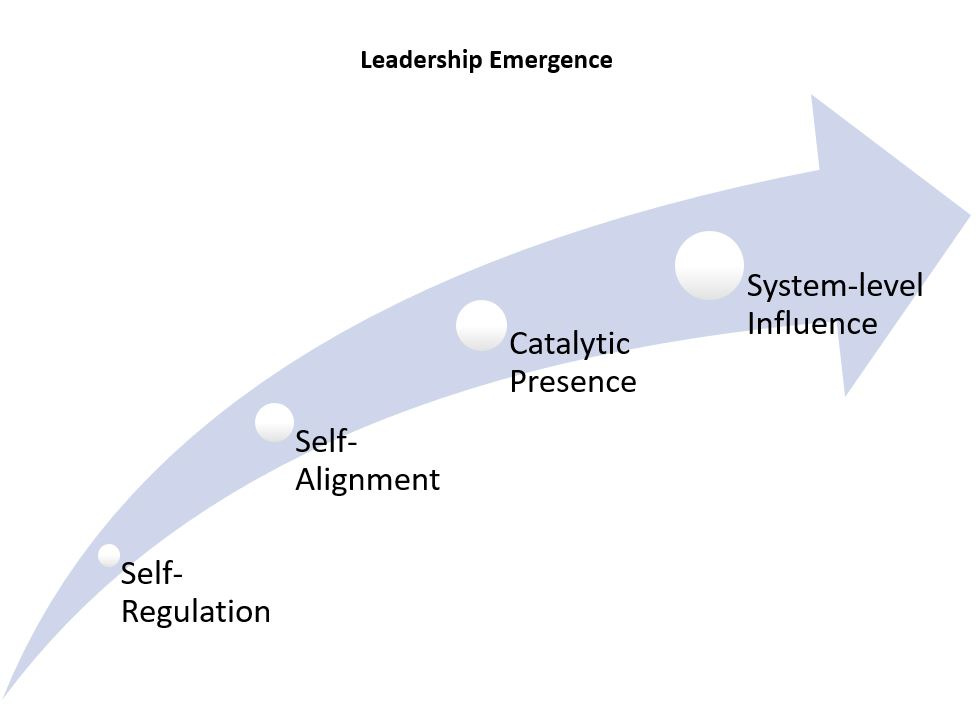
Why This Form of Leadership Matters
In hierarchical systems, this kind of leadership can seem slow. It rarely announces itself. But its influence is deep and durable. It cannot be easily co-opted because its source is not external status or institutional approval. Its power comes from coherence between self, action, and context.
When systems falter or collapse, it is this form of leadership that holds the possibility for transformation. It does not restore the old order. It creates conditions for emergence. Leaderful movements, those not built on a single figure, but on distributed coherence, depend on this kind of presence to take root and grow.
Power Within leadership is not the opposite of power. It is the beginning of another kind of power; one that invites, anchors, and amplifies rather than dominates. It is not soft. It is grounded, visionary, and profoundly generative.
Conclusion: The Wellspring Beneath the Fabric
Power Within is not a static possession nor an abstract virtue. It is a generative force, shaped by the architectures of internalization, the resonance of our bodies, the dynamics of memory and trauma, and the patterns of meaning we absorb and remake. It does not arise in isolation, it is seeded in relationships, modulated by culture, distorted by harm, and reclaimed through acts of deliberate reweaving.
This essay has proposed that Power Within emerges not from the conquest of the self, but from intimate, iterative attunement: to body, to meaning, to volition, to presence. It is neither purely emotional nor purely cognitive, but affectively grounded and somatically mediated. It is cultivated through the inner architectures that process and internalize the world: the threads of perception, memory, emotion, and value.
In this view, the self is not a sovereign ruler, but a semi-permeable ecosystem, receiving, filtering, metabolizing, and re-emitting the energies and structures it encounters. When those structures are rooted in domination, Power Within is often muted or contorted. But when the self is allowed to reclaim its full interior space, through safety, resonance, clarity, and compassionate witnessing, it becomes a node of coherence within a turbulent field. A person with Power Within does not dominate others. They invite emergence. They make resonance possible. They lead without control.
And so, in systems overrun by Power Over, the cultivation of Power Within is not a luxury or an escape. It is an act of resistance. A seed of transformation. A shift in the field. When Power Within is restored, it changes not only how we act but what kinds of coordination we can imagine, trust, and sustain. It is, at root, the soil of liberatory futures, that which makes every other form of power truly possible.
References
Arzy, S., Molnar-Szakacs, I., & Blanke, O. (2011). Self in time: Imagined self-location influences neural activity related to mental time travel. The Journal of Neuroscience, 31(21), 8105–8112. https://doi.org/10.1523/JNEUROSCI.0268-11.2011
Barrett, L. F. (2017). How emotions are made: The secret life of the brain. Houghton Mifflin Harcourt.
Bonanno, G. A. (2004). Loss, trauma, and human resilience: Have we underestimated the human capacity to thrive after extremely aversive events? American Psychologist, 59(1), 20–28. https://doi.org/10.1037/0003-066X.59.1.20
Brown, B. (2007). I thought it was just me (but it isn’t): Making the journey from “what will people think?” to “I am enough”. Gotham Books.
Creswell, J. D. (2017). Mindfulness interventions. Annual Review of Psychology, 68, 491–516.
Dana, D. (2018). The Polyvagal Theory in Therapy: Engaging the Rhythm of Regulation. W. W. Norton & Company.
Deci, E. L., & Ryan, R. M. (2000). The "what" and "why" of goal pursuits: Human needs and the self-determination of behavior. Psychological Inquiry, 11(4), 227–268. https://doi.org/10.1207/S15327965PLI1104_01
Dweck, C. S. (2006). Mindset: The new psychology of success. Random House.
Feldman Barrett, L. (2017). How emotions are made: The secret life of the brain. Houghton Mifflin Harcourt.
Fogel, A. (2009). Body sense: The science and practice of embodied self-awareness. W. W. Norton & Company.
Gallagher, S. (2005). How the body shapes the mind. Oxford University Press.
Goleman, D. (1995). Emotional Intelligence: Why it can matter more than IQ. Bantam Books.
Holmes, E. A., Blackwell, S. E., Burnett Heyes, S., Renner, F., & Raes, F. (2016). Mental imagery in depression: Phenomenology, potential mechanisms, and treatment implications. Annual Review of Clinical Psychology, 12, 249–280. https://doi.org/10.1146/annurev-clinpsy-021815-093740
Kirmayer, L. J., & Gómez-Carrillo, A. (2019). Agency, embodiment and enactment in psychosomatic theory and practice. Medical Humanities, 45(2), 108–117. https://doi.org/10.1136/medhum-2018-011497
Koch, S. C., Fuchs, T., Summa, M., & Müller, C. (Eds.). (2012). Body memory, metaphor and movement. John Benjamins Publishing.
LeDoux, J. (2015). Anxious: Using the brain to understand and treat fear and anxiety. Viking.
Lifton, R. J. (1968). Death in life: Survivors of Hiroshima. Random House.
Lutz, A., Dunne, J. D., & Davidson, R. J. (2007). Meditation and the neuroscience of consciousness. In P. Zelazo, M. Moscovitch, & E. Thompson (Eds.), The Cambridge Handbook of Consciousness (pp. 499–554). Cambridge University Press.
Markus, H. R., & Kitayama, S. (1991). Culture and the self: Implications for cognition, emotion, and motivation. Psychological Review, 98(2), 224–253.
Porges, S. W. (2011). The polyvagal theory: Neurophysiological foundations of emotions, attachment, communication, and self-regulation. W. W. Norton & Company.
Schore, A. N. (2009). Relational trauma and the developing right brain: An interface of psychoanalytic self psychology and neuroscience. Annals of the New York Academy of Sciences, 1159(1), 189–203.
Schore, A. N. (2021). The Development of the Unconscious Mind. W. W. Norton & Company.
Siegel, D. J. (2020). The Developing Mind: How Relationships and the Brain Interact to Shape Who We Are (3rd ed.). Guilford Press.
Stern, D. N. (2004). The present moment in psychotherapy and everyday life. W. W. Norton & Company.
Varela, F. J., Thompson, E., & Rosch, E. (1991). The embodied mind: Cognitive science and human experience. MIT Press.
Zeidan, F., Johnson, S. K., Diamond, B. J., David, Z., & Goolkasian, P. (2010). Mindfulness meditation improves cognition: Evidence of brief mental training. Consciousness and Cognition, 19(2), 597–605.
These are some thoughts that are lingering as I move through this piece. The resonance is palpable—I feel it in my body, like a chord that’s been humming underneath everything I’ve lived and tried to give language to. It’s more than agreement; it’s recognition.
This essay reads not just as a framework for personal sovereignty, but as a developmental process—a collective trauma recovery map. It mirrors what I’ve been sensing and naming in my own work through the Cognitive Ecology Model (CEM) and Exclusion Feedback Synpraxis (EFS): that coherence is not a given, it is a practice, and that practice must be rooted in safety, resonance, and choice.
It affirms something I often feel isolated for saying out loud: the fragmentation we carry isn’t ours alone. It’s patterned by systems that depend on disorientation. And yet—there’s a deeper thread of coherence that can be rethreaded, not by domination or “willpower,” but through grounded, relational, embodied reclamation.
This feels like a curriculum for emergent humanity. Thank you for articulating it so clearly. I feel less alone reading this.
💪✍️🙏